The 2009 Vintage:
A Wine Investment Analysis
“The greatest Bordeaux vintage I have ever tasted.” — Robert Parker, who awarded 19 perfect 100-point scores to the vintageAccess the Report —
What You Will Find Inside
64 pages of institutional-grade research distilled into actionable intelligence for building and managing a 2009 vintage wine portfolio.
50+ Wines Analyzed
Deep profiles across Bordeaux, Burgundy, Rhône, Napa, Italy, Spain, Portugal, and South America. From Petrus and Screaming Eagle to hidden opportunities.
ROI Projections
Four scenario models on a $200,000 portfolio with year-by-year return analysis. Bear, base, bull, and collector premium cases mapped to historical data.
Authentication Guide
Provenance verification, label inspection, capsule analysis, and recommended authentication services. Protect your capital from counterfeits.
Storage Recommendations
Professional storage standards, bonded warehouse comparison, insurance considerations, and conditions that preserve investment-grade quality.
Market Timing
When the 2009 vintage hits peak valuation windows. Drinking maturity curves mapped to historical price behavior for optimal positioning.
Exit Strategy
Auction houses, merchant buyback, private sales, and platform comparisons. How to liquidate holdings efficiently and at the best possible price.
Three Acquisition Tiers
The report organizes all 50+ wines into three risk-return tiers, giving you a framework for portfolio allocation at any scale.
Blue-Chip
Trophy wines with established secondary markets and proven appreciation curves.
- Pétrus 2009
- Screaming Eagle 2009
- DRC La Tâche 2009
- Dom Pérignon 2009
- Opus One 2009
- …and more analyzed in full
Select
High-quality wines with strong fundamentals at accessible entry points. The portfolio backbone.
- Second wines of First Growths
- Top Super Tuscans
- Leading Rhône producers
- Classified Burgundy
- Premium Napa Cabernets
- All picks detailed with rationale
Emerging
Under-the-radar wines with asymmetric upside potential. Higher risk, higher potential reward.
- Vega Sicilia Único 2009
- Rising Burgundy domaines
- Benchmark Spanish & Portuguese
- South American icons
- Cult micro-production estates
- Full analysis in report
ROI Projections
Four scenarios modelled on a $200,000 wine portfolio returns over a 5-year and 10-year horizon, drawn from historical Liv-ex data.
| Scenario | Annual Return | 5-Year Value | 10-Year Value |
|---|---|---|---|
| Bear Case | 5% | $255,256 | $325,779 |
| Base Case | 8% | $293,866 | $431,785 |
| Bull Case | 12% | $352,468 | $621,170 |
| Collector Premium | 15% | $402,271 | $809,072 |
Projections are illustrative and based on historical data. Past performance does not guarantee future returns. See full methodology in the report.
Why Wine as an Alternative Asset
Liv-ex Fine Wine 1000, 10yr
Near-zero market linkage
Domaine de la Romanée-Conti
Robert Parker, 2009 Bordeaux
Crisis Resilience
Fine wine has historically maintained value during equity drawdowns, providing portfolio stability when traditional markets decline.
Inflation Hedge
As a tangible luxury commodity, fine wine tends to appreciate with inflation rather than lose purchasing power against it.
Tax Advantages
In many jurisdictions, wine is classified as a wasting asset exempt from capital gains tax. The report covers key considerations.
Structural Scarcity
Every bottle consumed permanently reduces supply. Unlike equities or bonds, wine inventory can only decrease over time, supporting long-term price floors.
A Growing Buyer Pool
2009 is not only the greatest Bordeaux vintage in living memory — it is also the year Bitcoin was born. On January 3, 2009, Satoshi Nakamoto mined the genesis block, launching the asset that would create an entirely new class of wealth. This singular coincidence makes the 2009 vintage uniquely compelling to a generation of technology and digital-asset investors now diversifying into tangible luxury assets.
New collectors from technology and digital asset wealth are entering the fine wine market at an unprecedented rate, expanding the buyer pool for established vintages. Asian markets — particularly Hong Kong, Singapore, and mainland China — continue to drive demand for blue-chip Bordeaux and Burgundy.
What this means for you: your exit liquidity is growing. The buyers for your 2009 holdings are multiplying, not diminishing. The report maps these demand vectors in detail.
Who This Report Serves
Alternative Asset Investors
You allocate capital beyond equities and fixed income. You understand that uncorrelated returns strengthen a portfolio, and you want rigorous analysis before committing to a new asset class.
Wine Collectors
You already have a cellar. You appreciate fine wine. Now you want to approach your collection with an investor’s discipline — understanding which bottles are assets and which are best enjoyed at dinner.
Wealth Preservers
Capital preservation matters more than aggressive growth. You’re drawn to tangible assets that hold value across economic cycles, with the added benefit of low correlation to public markets.
Finance Professionals
You advise clients or manage portfolios. This report gives you the data, frameworks, and specific wine-level analysis to evaluate wine as a serious component of a diversified strategy.
What the Experts Said About 2009
The world’s most respected wine critics spoke with rare unanimity about 2009. Here is what they wrote.
“I have never seen anything like it in my career.”
— Christian Moueix, proprietor of Château Pétrus, La Fleur-Pétrus & Trotanoy — Wine Spectator
“The greatest vintage I have tasted in Bordeaux since 1982, of which it is a modern-day version, but greatly improved. The window of drinkability will be enormous.”
— Robert Parker, who awarded 19 perfect 100-point scores to the 2009 vintage — The Wine Advocate
“I have never given so many really high scores when tasting en primeur anywhere … unprecedented generosity and enthusiasm on my part.”
— Jancis Robinson MW, JancisRobinson.com
“At the top end, there are a clutch of spectacular, dare I say legendary wines in the making … pure, delineated, fresh, silky in texture.”
— Neal Martin, The Wine Advocate
“Of all the great vintages of the last 100 years, ’09 seems to have more in common with the silky concentration of ’82, ’47 or ’29.”
— Bill Blatch, Bordeaux négociant and vintage chronicler
“2009 Bordeaux wine is the sexiest, most opulent vintage I have tasted from the region. In time, it will become the most expensive and collectible Bordeaux vintage in history.”
— Jeff Leve, The Wine Cellar Insider
“If you have them, rejoice. If you don’t, get some now before the prices move in a significant way. These are wines of mesmeric character and monolithic ageability.”
— Bordeaux Index
“Hyperthetically, 2009 Bordeaux Is the Greatest Ever.”
— Wine Spectator, headline article on the 2009 vintage
“Fine wine returned 10.6% annually over the last decade with near-zero correlation to equities — making it one of the best portfolio diversifiers available.”
— Liv-ex, Fine Wine Market Data
Why 2009 Was Exceptional
Professor Denis Dubourdieu of the University of Bordeaux identified five conditions that must converge for a truly great vintage. In 2009, all five were met — a rare alignment that explains the unanimous critical acclaim.
Early Flowering
A warm spring triggered early, even flowering across the region — setting the stage for a long, uniform growing season.
Healthy Fruit Set
Uniform fruit set meant consistent berry size and quality across the vineyard, reducing sorting demands at harvest.
Early Véraison
The colour change arrived ahead of schedule, extending the ripening period and building phenolic complexity.
Full Ripening
Grapes reached full physiological maturity with ripe tannins, concentrated fruit, and balanced sugar levels.
Dry, Sunny Harvest
Warm, dry conditions at harvest allowed estates to pick at optimal ripeness without the pressure of incoming rain.
Based on the viticultural framework of Prof. Denis Dubourdieu, University of Bordeaux
Parker’s Verdict by the Numbers
Robert Parker’s average score across the top 30 châteaux: 96.7 / 100
Compare: 2000 vintage = 96.2 · 2005 vintage = 95.0
2009 set the highest average ever recorded for a Bordeaux vintage.
Not Just Bordeaux
2009 was also rated one of the best Burgundy red vintages of the 2000s decade, alongside 2005. The Cult Wines Burgundy Index delivered a 64.73% five-year return — roughly double the global fine wine average. From Bordeaux to Burgundy to the Rhône, 2009 delivered across every major French appellation.
Meet the Analyst
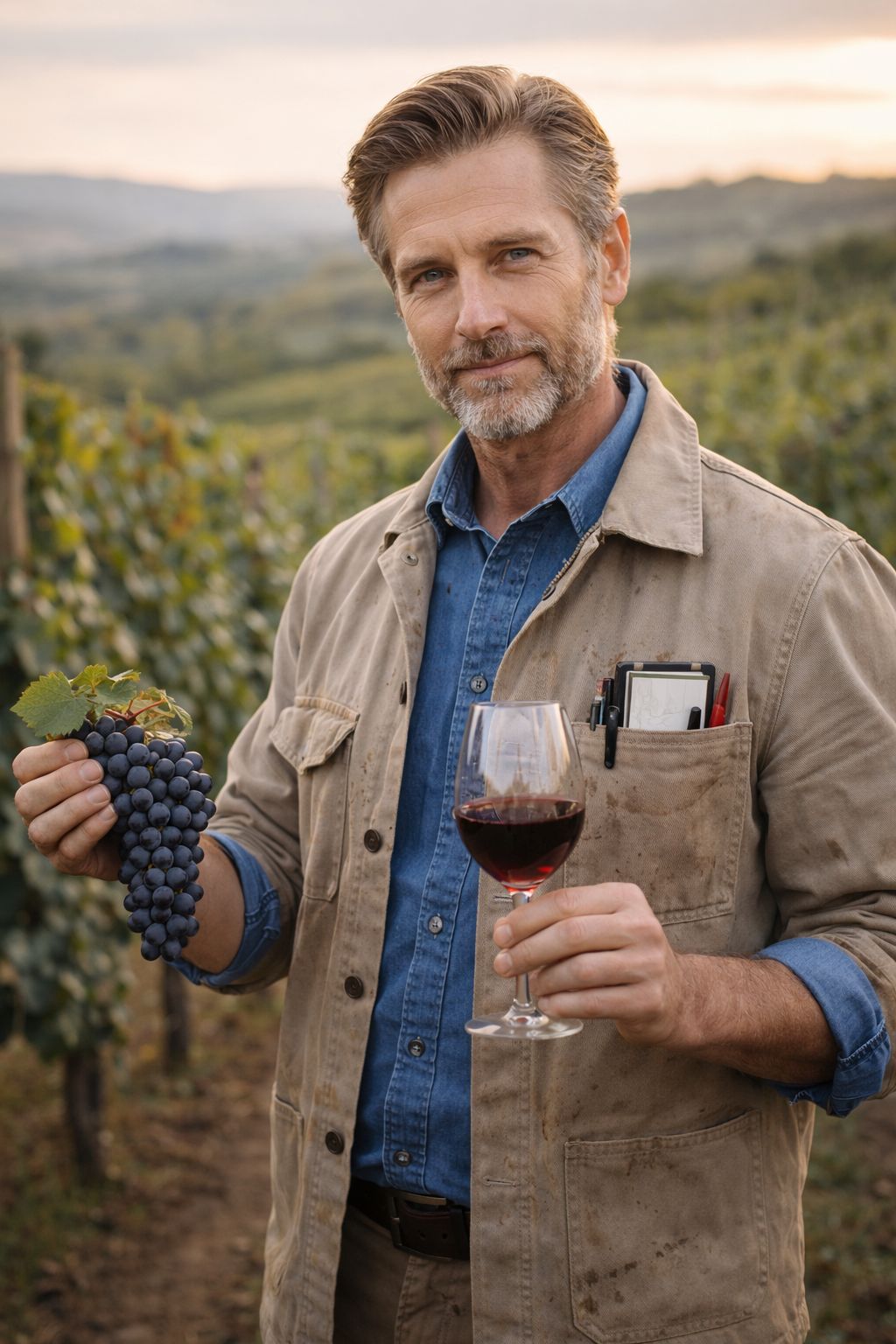
Jan Novák
Investment-Grade Wine Researcher
Independent analyst specialising in fine wine valuation. No merchant affiliations — recommendations driven by investment merit alone.
Questions? research@2009wine.com
Report Pricing
2009 Wine Investment Report
Limited-time introductory pricing. Instant PDF delivery.
Institutional research at accessible pricing. Comparable analysis from wine investment advisory firms typically costs $2,000+ annually.
- 64-page professionally formatted PDF
- 50+ individual wine analyses across 3 tiers
- ROI projections with 4 scenario models
- Authentication and counterfeit prevention guide
- Professional storage recommendations
- Market timing and exit strategy framework
- Historical price data and trend analysis
Instant PDF delivery. Secure payment processed by Stripe.
Not Ready to Commit? Preview 5 Wines First.
Download a complimentary 11-page preview with 5 wine picks, expert scores, and market prices. The full report covers 50+ wines across 3 acquisition tiers.
No spam. Unsubscribe anytime.
Frequently Asked Questions
Make an Informed Investment Decision
50+ wines. Three tiers. One vintage that Robert Parker called the greatest he ever tasted. The analysis is ready — the question is whether you are.
Access the Report —